
Industries & Businesses That Need Mandatory Registration in India
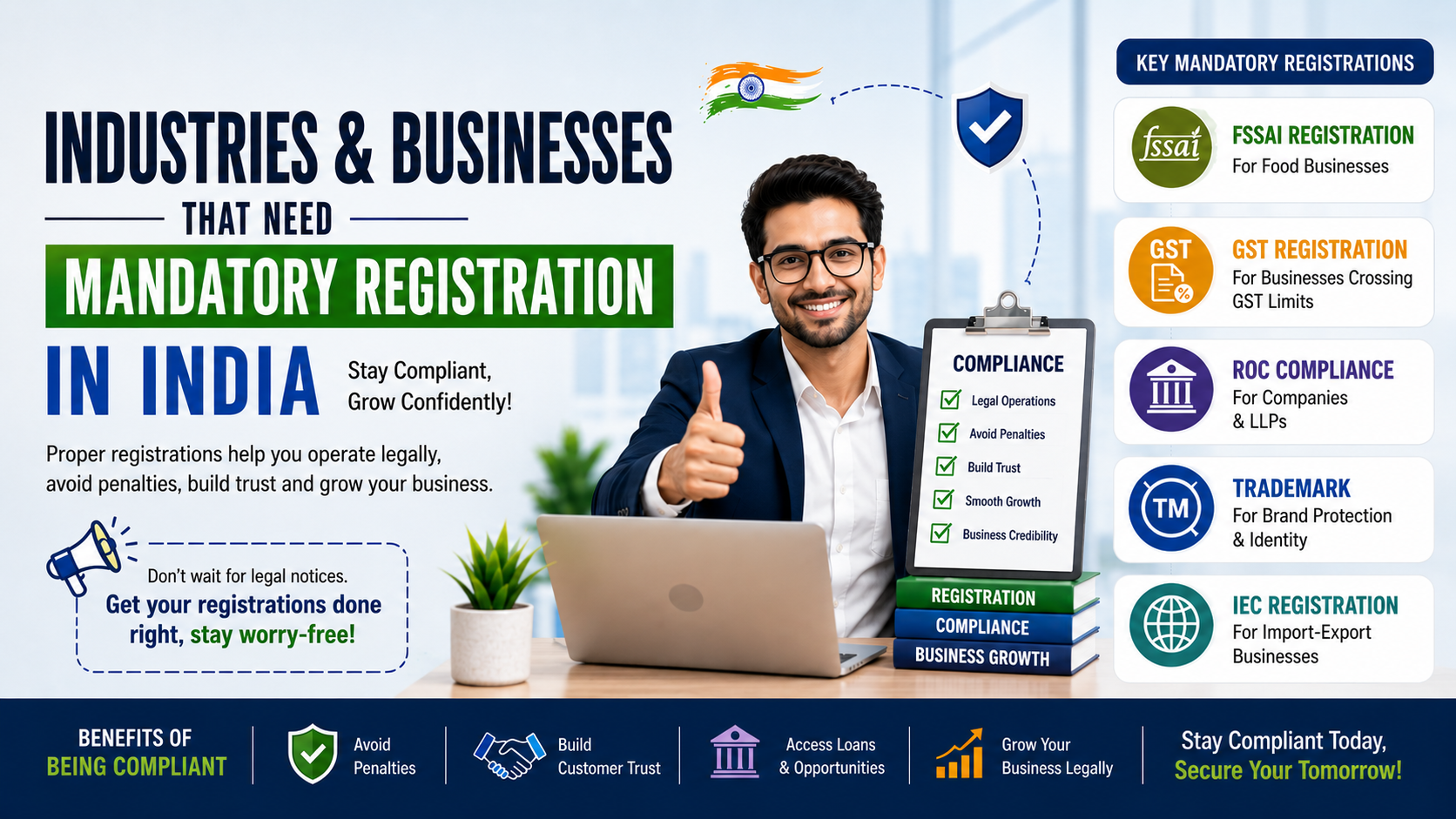
Industries & Businesses That Need Mandatory Registration in India
Running a business in India comes with legal responsibilities. Whether you are starting a food business, launching a company, selling products online, or entering international trade, obtaining the right registrations and licenses is essential for smooth operations and legal compliance.
Many entrepreneurs unknowingly delay registrations and later face penalties, notices, blocked operations, or compliance issues. Proper registrations not only help you stay compliant but also build trust, improve credibility, and support long-term business growth.
In this article, let’s understand the major industries and businesses that require mandatory registrations in India.
Why Business Registrations Are Important
Proper registrations help businesses:
- Operate legally
- Avoid government penalties
- Build customer trust
- Open bank accounts and payment gateways
- Access loans and funding
- Expand operations smoothly
- Improve brand credibility
Ignoring compliance requirements today can create serious legal and financial issues tomorrow.
1. Food Businesses – FSSAI Registration is Mandatory
If you are involved in any food-related activity, obtaining FSSAI Registration or License is compulsory under Indian law.
Businesses Covered Under FSSAI
- Restaurants
- Cafés
- Cloud Kitchens
- Bakeries
- Food Manufacturers
- Packaged Food Brands
- Catering Services
- Food Delivery Businesses
Benefits of FSSAI Registration
- Legal authorization to operate
- Customer trust and confidence
- Better food safety compliance
- Easier business expansion
- Eligibility for online food platforms
Operating a food business without FSSAI registration may attract penalties and closure notices from authorities.
2. Businesses Crossing GST Limits – GST Registration
GST Registration becomes mandatory when a business crosses the prescribed turnover threshold or engages in specific business activities.
GST Registration is Required For
- Businesses exceeding turnover limits
- E-commerce sellers
- Interstate suppliers
- Service providers
- Online businesses
- Amazon / Flipkart sellers
Advantages of GST Registration
- Input Tax Credit benefits
- Better business credibility
- Legal tax compliance
- Easier expansion opportunities
- Smooth business operations
Failure to register under GST when applicable can result in penalties, notices, and tax liabilities.
3. Companies & LLPs – ROC Compliance is Mandatory
All Companies and LLPs registered under the Ministry of Corporate Affairs (MCA) must comply with ROC filing requirements.
Mandatory ROC Compliance Includes
- Annual Filing
- Financial Statement Filing
- Annual Returns
- Maintenance of Statutory Records
- Compliance Documentation
- Tax-related filings
Why ROC Compliance Matters
- Avoid heavy penalties
- Maintain active company status
- Improve investor confidence
- Ensure legal business continuity
- Prevent director disqualification
Ignoring ROC compliance can lead to substantial fines and legal complications.
4. Trademark Registration – Protect Your Brand Identity
Trademark registration may not always be legally mandatory, but it is extremely important for businesses building a brand.
Trademark Helps Protect
- Brand Name
- Logo
- Product Identity
- Business Reputation
- Packaging Design
Benefits of Trademark Registration
- Exclusive legal rights
- Brand protection
- Prevention of duplicate usage
- Stronger market identity
- Long-term business value
A registered trademark protects your business identity and helps build a professional brand image.
5. IEC Registration – Mandatory for Import & Export Businesses
IEC (Import Export Code) issued by DGFT is mandatory for businesses involved in importing or exporting goods and services.
Who Needs IEC Registration?
- Importers
- Exporters
- Manufacturers
- Traders
- Startups entering global markets
Advantages of IEC Registration
- Access to international trade
- Government recognition
- Global business expansion
- Legal import-export operations
- Better credibility with overseas clients
Without IEC registration, businesses cannot legally conduct import-export activities.
Common Consequences of Non-Compliance
Businesses operating without mandatory registrations may face:
- Legal notices
- Heavy penalties
- Business interruptions
- GST or tax issues
- Loss of customer trust
- Problems with banks and marketplaces
- Difficulty in scaling operations
Timely registrations help businesses stay secure, compliant, and growth-ready.
How Professional Compliance Support Helps
Managing registrations and compliance can become complicated for business owners. Professional guidance helps ensure:
- Correct registration selection
- Timely filing and renewals
- Proper documentation
- Error-free applications
- Smooth compliance management
Getting expert assistance saves time, reduces risks, and allows business owners to focus on growth.
Conclusion
Every business has different compliance requirements depending on its industry and operations. Whether it is FSSAI for food businesses, GST registration for taxable businesses, ROC compliance for companies, trademark protection for brands, or IEC registration for international trade, timely compliance is essential.
Proper registrations help businesses avoid penalties, improve credibility, and create a strong foundation for long-term success.
If you are planning to start a business or need assistance with registrations and compliance services, professional support can help you stay legally compliant and business-ready.
Have Questions? We're Here to Help
Get expert advice from NARESH POKALA & COMPANY. Reach out to discuss your requirements.